S.D.-born biotech advances potential Type 1 diabetes therapy through global trial
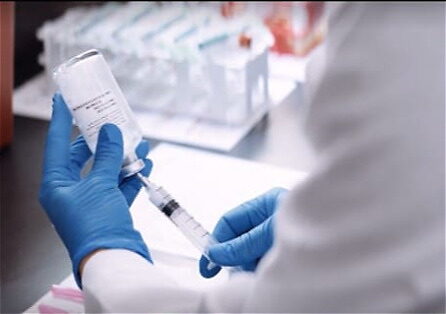
A biotech company with deep South Dakota roots is advancing what could become a disease-modifying therapy for Type 1 diabetes through a global clinical trial — with much of the research and development still based in Sioux Falls.
SAB Biotherapeutics Inc., also known as SAB BIO, is enrolling patients in its pivotal registrational trial for SAB-142, a therapy being developed for Type 1 diabetes.
The company also recently received additional support for its work when Breakthrough T1D awarded a grant supporting a clinical study of SAB-142 in patients with stage three Type 1 diabetes who are 100 days to two years from diagnosis. The study is designed to evaluate whether SAB-142 can help preserve insulin-producing beta cells beyond the earliest stage of disease.
For SAB co-founder and president Eddie Sullivan, it is the latest step in a long scientific and entrepreneurial journey.
“It’s been a long road but to be in this kind of a registrational trial for a potentially what we would call a disease-modifying drug is significant,” Sullivan said. “This isn’t used to treat the disease. It’s a treatment to modify the disease, to halt it from advancing at whatever stage.”
SAB-142 is a fully human anti-thymocyte immunoglobulin, or hATG, being developed for Type 1 diabetes. SAB has described it as a potential disease-modifying therapy designed to delay onset and potentially prevent progression in stage three Type 1 diabetes.
The company’s current SAFEGUARD trial is enrolling globally, with more than 60 clinical sites in Australia, New Zealand, Europe and the U.S., Sullivan said. The study is enrolling patients 12 and older, with hopes of eventually moving into pediatric patients 5 and older.
The total enrollment goal is 159 globally, he said. SAB expects to complete enrollment by the end of the year, with eligible patients participating for two years after the last patient is enrolled. SAB previously reported that enrollment in SAFEGUARD was on track to be completed by the end of this year, with top-line data expected in the second half of 2027.
While Sioux Falls does not have a trial site, the closest location connected to the region is Sanford Fargo, where the principal investigator is focused on Type 1 diabetes, Sullivan said.
“As far as the clinical study is concerned, patients in Sioux Falls could be referred to the site in Fargo to start the study, and they don’t have to be in Fargo,” he said. “They would go there to do the initial treatment.”
The study includes an initial dose and a second dose at six months. It is placebo-controlled, with one-third of participants receiving a placebo. As an incentive to participate, Sullivan said, the study includes a later portion in which all patients, including those who received the placebo, eventually would be eligible to receive the active drug after the first year.
Honing a focus
The current focus marks a significant shift for SAB, whose platform has been applied to multiple disease areas since the company’s founding.
“SAB’s primary focus now is exclusively Type 1 diabetes,” Sullivan said. “And, of course, eventually as we move to getting this indication approved, we will look at other autoimmune indications for SAB-142.”
SAB’s headquarters is in Miami, but Sioux Falls remains central to the company’s work, including all its R&D facilities. Sullivan continues to run the company day to day, with his focus now primarily internal to research and development.
The company has 108 employees, with about 60 of them in Sioux Falls, Sullivan said. Local operations “are pretty broad,” he said, including drug manufacturing, quality control, quality assurance, scientific characterization of antibodies, administrative functions, finance, project management and the farm where the animals used in the company’s platform are housed.
SAB’s platform uses genetically engineered cattle to produce fully human antibodies, an approach that differentiates SAB-142 from existing animal-derived therapies. In Type 1 diabetes, the disease process is autoimmune, meaning the immune system attacks insulin-producing cells.
“Even though we call them diabetes, they are two very different diseases,” Sullivan said of Type 1 and Type 2 diabetes. “They have the same symptoms with sugar regulation, but Type 1 is an autoimmune disease, Type 2 is an insulin-resistance disease.”
SAB-142 is designed to address the autoimmune process that causes Type 1 diabetes, he said.
The patients currently being enrolled have been diagnosed and have taken their first dose of insulin. The goal is not to replace insulin therapy immediately but to stop the disease from continuing to progress, allowing patients to better maintain their own remaining ability to regulate insulin production.
“These patients may need insulin, but the hopeful advantage of our drug is that it would stop the disease from progressing,” Sullivan said. “And these patients will be able to control their sugars much easier if they have maintained some level of their own ability to regulate insulin production.”
That distinction matters because Type 1 diabetes often changes daily life from the moment of diagnosis.
“I think all of us have family or friends that have Type 1 diabetes, and from the moment of diagnosis, it changes everything,” Sullivan said. “It is a significant amount of your day devoted to maintaining your insulin levels sufficiently to regulate glucose levels.”
Today, patients have tools such as continuous glucose monitors and insulin pumps, but SAB’s goal is different: to intervene in the disease process itself.
The company began with diagnosed patients because they are easier to identify, Sullivan said. Longer term, the autoimmune process begins well before a person becomes diabetic. If patients can be identified earlier, future use of the therapy potentially could focus on preventing progression before insulin is required.
“The goal would be to never have to take insulin,” Sullivan said. “And we want to be able to see if this drug would be able to do all of that, and that’s certainly a part of the future plans.”
SAB previously completed a Phase 1 clinical trial in Australia, which primarily studied safety in healthy volunteers but also included a small cohort of patients with Type 1 diabetes. Earlier this year, SAB reported additional Phase 1 data showing C-peptide preservation in all four Type 1 diabetes participants who received SAB-142, with improved glycemic control.
Because the number of patients was small, Sullivan said the data should not be viewed as statistical proof of efficacy. But it was encouraging enough to support continued development.
“The data is reported, but it’s not statistical because of the low number of patients,” he said. “It literally is just encouragement that we have the potential for efficacy.”
That kind of signal matters in drug development, where clinical trials can require tens of millions of dollars.
“When you’re going to spend that kind of money, any indication that encourages efficacy is encouraging,” Sullivan said.
One of the advantages SAB sees in SAB-142 is that it is fully human, which could allow for repeat dosing. Sullivan contrasted that with an existing rabbit-derived polyclonal antibody used in transplant induction therapy that has shown activity in Type 1 diabetes but can be limited by immune reactions.
“The advantage is we are making the human antibodies to a similar target,” he said.
Because SAB-142 is fully human, the hope is that patients would not experience the same immune response or serum sickness associated with animal-derived antibodies and that the drug could be redosed safely and effectively.
“The idea behind SAB-142 is it can be given potentially over a lifetime to keep the autoimmune reaction at bay and stop the disease from progressing,” Sullivan said.
Next steps
As the trial progresses, SAB also is preparing for the regulatory path ahead. For a biologic such as SAB-142, the company first receives authorization through an investigational new drug application to begin clinical trials. If the registrational trial is completed successfully, SAB would file a biologics license application with the U.S. Food and Drug Administration, Sullivan said.
SAB also is beginning early commercialization planning, including evaluating potential market size, though a drug cannot be marketed before approval.
The publicly traded company appears financially positioned to continue advancing the program. In May, SAB reported a strong cash position and said it had operational runway through 2028 to support execution of SAFEGUARD and pre-commercial activities.
For South Dakota’s biotech community, SAB’s progress reflects the continued potential for advanced life sciences companies to grow from the region while operating on a global stage.
“It has been a long and winding process, but we’ve been believers from day one and continue to be excited by SAB’s global potential,” said Joni Ekstrum, executive director of South Dakota Biotech.
“Eddie is a generational leader in our biotech community and continues to inspire others to consider what’s possible in our state.”
Sullivan helped establish South Dakota Biotech and has long been part of the state’s bioscience development. The company’s Sioux Falls presence remains a key part of its identity and operations, he said.
For now, SAB’s near-term milestone is clear: Complete enrollment in the global trial, continue following patients, and move closer to determining whether SAB-142 can change the trajectory of Type 1 diabetes.
If it does, the impact could extend well beyond one indication.
“It has potential for broader application for other autoimmune diseases,” Sullivan said.